Best Bearded Dragon Thermostats (2026)
The best reptile thermostats for bearded dragons in 2026. Dimming and on/off temperature controllers compared for basking safety, probe quality, and value.
A thermostat is the safety device that keeps your bearded dragon's basking bulb from overheating the tank. It watches a probe at the basking zone and regulates power so the hot spot stays locked at a safe 95 to 110F. For light bulbs a dimming controller is ideal, while on/off units pair well with ceramic heat emitters. Here are six dependable temperature controllers for keepers.
Best Bearded Dragon Thermostats for 2026
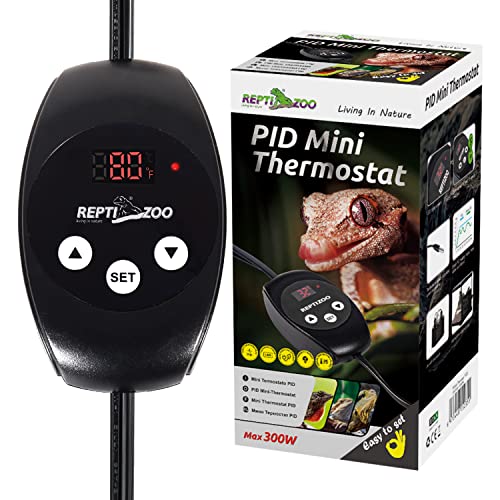
REPTI ZOO Dimming Thermostat PID Temperature Controller
Smooth dimming control with memory, ideal for basking light bulbs.

Inkbird ITC-308 Digital Temperature Controller, 2-Stage
Dual-outlet heat-and-cool control trusted by reptile keepers.

CAVACHEW Dimming Thermostat Reptile PID
Affordable proportional dimming control for a steady basking spot.

BN-LINK Reptile Thermostat Temperature Controller
Simple, reliable on/off control at a beginner-friendly price.

WILLHI WH2408 Temperature Controller, 10A 1200W Outlet
Higher-wattage outlet controller for larger or multi-bulb setups.

GECXGY Reptile Thermostat Temperature Controller with Timer
On/off control plus a day-night timer for automated cycles.
As an Amazon Associate we earn from qualifying purchases at no extra cost to you. Feeding and supplement guidance here is researched care information, not veterinary advice; confirm dosing with a reptile vet.
How we chose these thermostats
These selections are based on reptile-veterinary guidance, breeder best practices, verified keeper reviews, and published product specs, not on hands-on lab testing. We included both dimming and on/off controllers so you can match the unit to your heat source, prioritizing dimming models for basking light bulbs because smooth proportional control protects the bulb and steadies the hot spot. We also weighed probe quality, wattage capacity, ease of setup, safety behavior, and overall value for keepers building a reliable, hands-off heating system.
Bearded dragon thermostat comparison
| Brand & Model | Control Type | Key Spec | Best For | Budget |
|---|---|---|---|---|
| REPTI ZOO Dimming PID | Dimming (proportional) | Memory function | Basking light bulbs | Under $50 |
| Inkbird ITC-308 | On/off, 2-stage | Dual outlet, heat & cool | Ceramic emitters | Under $50 |
| CAVACHEW Dimming PID | Dimming (proportional) | Budget dimmer | Value dimming control | Under $25 |
| BN-LINK Thermostat | On/off | Simple plug-in | Beginners | Under $25 |
| WILLHI WH2408 | On/off outlet | 10A / 1200W | High-wattage setups | Under $50 |
| GECXGY Thermostat + Timer | On/off with timer | Day-night scheduling | Automated cycles | Under $25 |
REPTI ZOO Dimming Thermostat PID Temperature Controller
This is our Top Pick because it is a true dimming controller, which is exactly what a basking light bulb needs. Instead of flickering on and off, it smoothly modulates power to hold a stable hot spot, protecting both the bulb and your dragon's comfort. The memory function restores your settings after a power blip. It suits keepers who run a standard basking bulb and want the steadiest, safest regulation available at a fair price.
Inkbird ITC-308 Digital Temperature Controller
The ITC-308 is a keeper favorite, offering reliable two-stage on/off control with separate heating and cooling outlets. Because it is an on/off unit, it pairs best with a ceramic heat emitter rather than a light bulb, where on-off cycling would cause flicker. It is a great choice if you supplement heat with a non-light source or want the flexibility of a dual-outlet controller with a clear, well-regarded interface.
CAVACHEW Dimming Thermostat Reptile PID
For keepers who want dimming control on a tighter budget, the CAVACHEW PID delivers smooth proportional regulation at a lower price than many competitors. It holds a steady basking temperature without the flicker of on-off units, making it well suited to light bulbs. It is a solid value pick; as with any controller, mount the probe at the basking surface and verify the result with a separate thermometer.
BN-LINK Reptile Thermostat Temperature Controller
The BN-LINK is a simple, plug-in on/off thermostat that gets beginners up and running quickly and affordably. It is an easy entry point for keepers who want basic safety regulation without a learning curve. Since it is on/off, it works best with ceramic heat emitters or as a safety cutoff; if you run a basking light bulb as your main heat, a dimming model will give a smoother, flicker-free hot spot.
WILLHI WH2408 Temperature Controller, 10A 1200W Outlet
With a 10A, 1200W outlet rating, the WILLHI WH2408 handles higher-wattage or multi-fixture setups that smaller controllers cannot. It is the right pick for larger enclosures or keepers running powerful heat sources. As an outlet-style on/off controller it pairs naturally with ceramic emitters; confirm your total wattage stays within its limit, place the probe at the basking zone, and double-check temperatures with a thermometer.
GECXGY Reptile Thermostat with Timer
The GECXGY combines on/off temperature control with a built-in timer, letting you automate day-night cycles alongside safe heat regulation. It is a convenient choice for keepers who want their lighting and heating to follow a consistent schedule with less daily fuss. As an on/off unit it suits ceramic heat emitters best; for a basking light bulb, keep the timer benefits in mind but consider a dimming controller for the smoothest hot spot.
What to look for in a bearded dragon thermostat
Choosing a controller is mostly about matching the type to your heat source and setting it up so the probe reads the temperature that matters. Use these points to decide.
Control type
Pick a dimming or pulse-proportional thermostat for basking light bulbs, since it adjusts power smoothly and avoids flicker. Choose an on/off thermostat for ceramic heat emitters or as a safety cutoff. Matching the control style to the heat source gives you the most stable, bulb-friendly results.
Probe, capacity, and safety
Look for a quality probe you can secure at the basking surface, a wattage rating comfortably above your heat source, and clear safety behavior so the unit fails safe and prevents overheating. Memory functions that restore settings after a power loss are a nice bonus.
Setup checklist
- Mount the probe at the basking surface where your dragon perches, not dangling in the air.
- Set the target to your basking range, 95 to 100F for adults and 100 to 110F for juveniles.
- Confirm the cool end holds 75 to 85F so your dragon can thermoregulate.
- Verify readings with a separate thermometer rather than trusting the controller alone.
- Match the thermostat type to your heat source, dimming for bulbs and on/off for ceramic emitters.
- Keep total wattage within the controller's rating.
Mistakes to avoid
- Running a heat bulb with no thermostat at all, which risks overheating and burns.
- Using an on/off thermostat with a light bulb and living with the flicker.
- Leaving the probe in open air instead of at the basking surface.
- Adding unnecessary nighttime heat when the room stays above about 65F.
Deciding on a specific model? We review the Inkbird ITC-308 review for reptile keepers, Inkbird digital outlet heat controller with day and night control review and REPTIZOO dimming PID thermostat review in full.
Frequently Asked Questions
Why does a bearded dragon need a thermostat?
A thermostat keeps your dragon's heat source from overheating the enclosure, which protects your pet from dangerous temperature spikes and even burns. Bearded dragons need a precise basking range of 95 to 110F, and an unregulated bulb can easily overshoot on a warm day. A thermostat monitors a probe at the basking zone and cuts or dials back power automatically, holding a safe, steady temperature you can rely on around the clock.
What is the difference between on/off and dimming thermostats?
An on/off thermostat switches the heat source fully on or off as it crosses the set temperature, which is fine for ceramic heat emitters but causes visible flickering with light bulbs. A dimming or pulse-proportional thermostat smoothly raises and lowers power to hold a stable temperature without flicker. For a basking light bulb, a dimming thermostat is the better choice because it protects the bulb and gives a steadier hot spot.
Which thermostat type is best for a basking bulb?
Use a dimming (proportional) thermostat for a basking light bulb. Dimming units gradually adjust the power feeding the bulb, so you avoid the rapid on-off cycling that shortens bulb life and creates a flickering hot spot. On/off thermostats are better paired with non-light heat sources like ceramic heat emitters, where flicker is not a concern. Matching the thermostat type to the heat source gives you the safest, most stable results.
Where should I place the thermostat probe?
Place the probe at the basking surface where your dragon actually sits, so the thermostat regulates the temperature that matters most. Secure it to the basking branch or rock rather than letting it dangle in the air, since air readings differ from the surface temperature. After mounting, confirm with a separate thermometer that the basking spot holds in the 95 to 110F range and the cool end stays at 75 to 85F.
Can I run a bearded dragon heat bulb without a thermostat?
You should not. An unregulated heat bulb can climb well past safe temperatures, especially as room conditions change through the day and seasons, risking heat stress or burns. A thermostat is inexpensive insurance that keeps the basking zone locked to your target. Always run basking and heat sources through a thermostat, place the probe at the basking surface, and verify the temperature with a separate thermometer.
How did we choose these reptile thermostats?
Our picks are based on reptile-veterinary guidance, breeder best practices, verified keeper reviews, and published product specs, not on hands-on lab testing. We included both dimming and on/off controllers so keepers can match the unit to their heat source, and we weighed safety features, ease of setup, probe quality, and value. Dimming models earned priority for basking light bulbs, since smooth proportional control protects the bulb and holds the steadiest hot spot.
Need more help with your bearded dragon?
Browse our guides by topic to find practical solutions.
Care Planner: $39