Best Reptile Thermostats for Bearded Dragons (2026)
The best reptile thermostats for bearded dragons compared: dimming and on-off controllers for basking bulbs and ceramic heat emitters, with setup and probe placement tips.
A thermostat is the safety net of your bearded dragon's heating system. It holds the enclosure at a steady, correct temperature and stops a bulb or ceramic emitter from overheating the tank when the room warms up or the seasons change. It is strongly recommended on any heat source and absolutely essential on a ceramic heat emitter. Below are six reliable controllers, from simple on-off units to precise dimming and PID models, with a comparison table and setup guidance.
Best Reptile Thermostats at a Glance

Inkbird ITC-308 Digital Temperature Controller
Versatile 2-stage controller, a longtime keeper favorite for reliability.
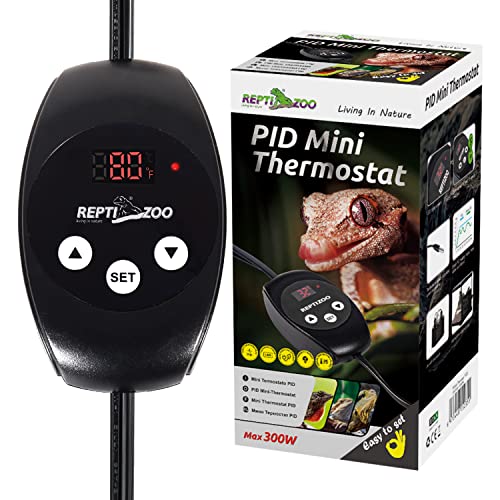
REPTI ZOO Dimming Thermostat, PID with Memory
Smooth dimming control ideal for flicker-free daytime basking bulbs.

BN-LINK Reptile Thermostat Temperature Controller
Simple, affordable on-off controller for ceramic emitters and mats.

CAVACHEW Dimming Thermostat (PID) for Reptiles
Budget-friendly dimming PID control for bulbs, mats, and emitters.

GECXGY Reptile Thermostat with Built-in Timer
Combines temperature control with day-night timing in one unit.

WILLHI WH2408 Temperature Controller Outlet
Sturdy plug-in controller for higher-wattage heat sources.
As an Amazon Associate we earn from qualifying purchases at no extra cost to you. Feeding and supplement guidance here is researched care information, not veterinary advice; confirm dosing with a reptile vet.
How we chose these thermostats
These picks reflect reptile-care best practices, manufacturer specifications, and verified keeper reviews rather than hands-on lab testing. We looked for controllers with accurate probes, adequate wattage handling for basking bulbs and ceramic emitters, and clear displays. We included both on-off units, which suit ceramic emitters, and dimming or PID units, which give the smooth, flicker-free control that daytime basking bulbs benefit from. We also favored models with a track record of reliability, since a thermostat is a safety device.
Comparison table
| Product | Type | Best for | Budget |
|---|---|---|---|
| Inkbird ITC-308 | On-off, 2-stage | All-around reliability | Under $50 |
| REPTI ZOO Dimming PID | Dimming PID | Daytime basking bulbs | Under $50 |
| BN-LINK Controller | On-off | Budget night emitters | Under $25 |
| CAVACHEW Dimming PID | Dimming PID | Value dimming control | Under $25 |
| GECXGY Thermostat + Timer | On-off + timer | Combined timing | Under $25 |
| WILLHI WH2408 | On-off outlet | Higher-wattage heat | Under $50 |
The picks in detail
Inkbird ITC-308 (best overall)
A longtime favorite among keepers for its reliability and clear display, the ITC-308 is a two-stage controller that plugs inline between your heat source and the outlet. It is a dependable, accurate on-off unit that works well for ceramic heat emitters and is simple to set and trust.
REPTI ZOO Dimming PID (best for basking bulbs)
Dimming control is the right choice for a daytime basking bulb because it smoothly adjusts output instead of flickering on and off. This PID unit holds a precise target and includes memory so it restores settings after a power interruption, making for a clean, stable basking setup.
BN-LINK Controller (budget pick)
A straightforward, affordable on-off controller that handles ceramic heat emitters and heat mats well. If you only need to keep a cold room from dropping too low at night, this is an economical way to add safe, regulated heat.
CAVACHEW Dimming PID (value dimming)
Dimming PID control at a budget-friendly price, suitable for bulbs, mats, and emitters. A good option if you want smooth proportional control without paying premium pricing.
GECXGY Thermostat with Timer (combined control)
This unit pairs temperature control with a built-in timer, letting you handle both heating and day-night timing in one device. Handy for keepers who want to consolidate their equipment, though always verify the timing and temperature behavior match your dragon's schedule.
WILLHI WH2408 (higher-wattage heat)
A sturdy plug-in outlet controller rated for higher loads, useful when running a more powerful heat source. Simple to operate and built to handle demanding setups.
How to set up a thermostat correctly
- Place the probe at the basking surface, right where your dragon rests, not in the air or near the cool side.
- Set the target so the basking surface reaches 95 to 105°F for adults, up to 110 for juveniles.
- Confirm with a separate infrared thermometer, since the probe controls heat but an independent reading verifies the true surface temperature.
- Use dimming for basking bulbs to avoid flicker, and any reliable controller for night emitters.
- Secure the probe so your dragon cannot dislodge it.
A thermostat is inexpensive insurance against a dangerous heat spike. Pair the right controller with your basking bulb or ceramic emitter, set it carefully, and verify the result, and your dragon enjoys stable, safe temperatures every day and night.
Frequently Asked Questions
Do bearded dragons need a thermostat?
A thermostat is strongly recommended for any heat source, and essential for a ceramic heat emitter. It holds the enclosure at a safe, steady temperature and prevents a bulb or emitter from overheating the tank on a warm day or when room temperatures swing. For basking bulbs a dimming thermostat works best, smoothly adjusting output, while for ceramic emitters at night a reliable on-off or dimming controller protects your dragon from dangerous spikes.
What is the difference between a dimming and on-off thermostat?
An on-off thermostat switches the heat source fully on or off to hold a target, which is fine for ceramic heat emitters but causes visible flicker with light-emitting bulbs. A dimming, or pulse-proportional, thermostat smoothly raises and lowers output to maintain temperature, which is ideal for basking bulbs because there is no flicker. For a clean daytime basking setup, choose a dimming thermostat; for night heat, either type works.
What temperature should I set the thermostat to?
Set the thermostat so the basking surface reaches 95 to 105 degrees Fahrenheit for adults, up to 110 for juveniles, measuring at the spot where your dragon actually lies. Place the thermostat probe at the basking surface, not the air above it, and confirm the reading with a separate infrared thermometer. For nighttime ceramic emitters, set a modest target that simply keeps the tank from dropping below the mid-60s.
Where do I put the thermostat probe?
Position the thermostat probe at the basking surface, right where your dragon rests, so the controller regulates the temperature that actually matters. Avoid placing it in the air gap or near the cool side, which would give misleading readings. Secure it so your dragon cannot dislodge it. Always double-check the result with a separate infrared thermometer gun, since the probe controls the heat but an independent reading confirms the true surface temperature.
Can one thermostat control both day and night heat?
A single basic thermostat controls one device at a time, so a day basking bulb and a night ceramic emitter usually need separate control or a day-night capable unit. Some controllers offer day and night setpoints, and others pair with a timer. The simplest reliable approach for many keepers is a dimming thermostat on the daytime basking bulb plus a separate thermostat on the nighttime ceramic emitter if the room requires one.
Are smart or PID thermostats worth it?
PID and dimming thermostats hold temperature more precisely and smoothly than basic on-off units, which is valuable for daytime basking bulbs where flicker and swings are undesirable. They cost a little more but give tighter, more stable control and often add features like memory after a power loss. For a single straightforward night emitter, a simpler controller is fine, but for a polished basking setup a dimming or PID unit is a worthwhile upgrade.
Need more help with your bearded dragon?
Browse our guides by topic to find practical solutions.
Care Planner: $39