German Giant Bearded Dragon: Care & Size Guide
German Giant bearded dragons explained: a size line that reaches 20 to 24+ inches. Learn the tank size they need, how much they eat, and how to verify lineage.
The German Giant is one of the most misunderstood names in the bearded dragon world. It sounds exotic, but it is not a separate species and it is not a color or pattern morph. A German Giant is a size line: a strain of the standard central bearded dragon, Pogona vitticeps, that breeders selectively bred for larger body size over many generations. The result is a dragon that can reach roughly 20 to 24 inches or more, noticeably bigger and heavier than a typical 16 to 20 inch beardie. The single care difference is scale. A giant needs a larger enclosure and more food, and everything else stays exactly the same.
Sized-Up Gear for a German Giant

Phailozoo Phailozoo 120 Gallon Bearded Dragon Tank 48x24x24
Roomy adult footprint that fits a full-grown giant comfortably
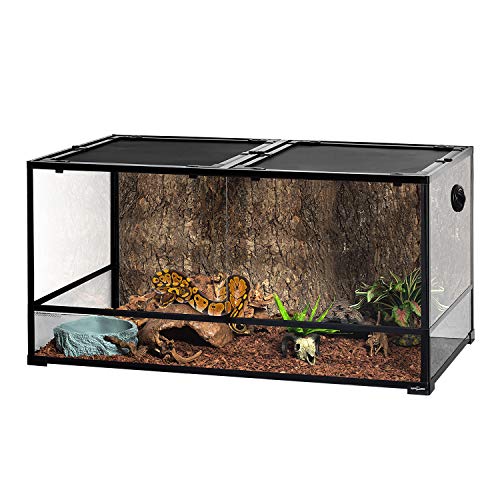
REPTI ZOO REPTI ZOO Large Reptile Terrarium 120 Gallon
Front-opening 120 gallon home with room for a true heat gradient

REPTI ZOO REPTI ZOO T5 HO 10.0 UVB Bulb 24W
Standard high-output UVB that a giant needs just like any beardie

Dubia Roaches 100 Large Dubia Roaches (live)
Protein-dense feeders to fuel a fast-growing, big-bodied dragon
As an Amazon Associate we earn from qualifying purchases at no extra cost to you. Feeding and supplement guidance here is researched care information, not veterinary advice; confirm dosing with a reptile vet.
What a German Giant Actually Is
Every bearded dragon you see in the hobby, whether it is a fancy color morph or a plain wild-type, belongs to the same species. Morphs describe variations in color, pattern, and scale. The German Giant is none of those. It is a line, which means breeders chose the biggest, most robust individuals and paired them together year after year. Over time those choices concentrated the genes for larger size. The story goes back to dedicated European breeders, hence the German part of the name, who built the original giant bloodlines.
Because the giant trait comes from selective breeding rather than a single gene, size can vary. A dragon from strong, well-documented giant lineage is far more likely to grow large than one sold under the label with no paperwork. That distinction matters, and we will come back to it.
How Big Do They Get?
Here is a simple comparison to set expectations. Remember that these are general ranges, not guarantees, and that diet, genetics, and care all influence final size.
| Trait | Standard Bearded Dragon | German Giant |
|---|---|---|
| Adult length | About 16 to 20 inches | Roughly 20 to 24+ inches |
| Body mass | Standard build | Heavier, broader, thicker |
| Head and limbs | Proportional | Often noticeably bulkier |
| Adult enclosure | 40-gallon-breeder minimum | 120 gallon minimum recommended |
| Food volume | Standard portions | Larger portions, same ratios |
A genuine giant usually reveals its size as it matures, generally by 12 to 18 months. Juveniles grow quickly, so steady, well-supported growth in the first year is normal and healthy. Avoid the temptation to power-feed a young dragon to force size, since rushed growth can stress the body. Good genetics paired with correct care produce a large adult on their own schedule.
The Larger Enclosure They Need
This is where care for a German Giant genuinely differs. A standard adult bearded dragon does fine in a 40-gallon-breeder enclosure as a bare minimum, with 75 to 120 gallons being better. A giant simply has more body to house, so size up from the start of adulthood. A 120 gallon enclosure, roughly 48 by 24 by 24 inches, is a sensible minimum for an adult giant, and bigger is always welcome.
Floor space matters more than height for a ground-dwelling dragon. A longer enclosure lets you place the basking lamp at one end and keep the opposite end cool, creating the warm-to-cool gradient your dragon uses to regulate its temperature. In a too-small tank, the whole space tends toward one temperature, which removes the dragon's ability to thermoregulate. The extra length of a giant-appropriate enclosure solves that and gives a big animal room to walk, climb, and rest.
Setting Up the Larger Space
- Use a robust basking platform so a heavy dragon can get close to the lamp safely.
- Maintain a basking surface of 95 to 110F and a cool side of 75 to 85F, measured with a reliable thermometer.
- Run a T5 HO 10.0 UVB bulb across much of the enclosure length so the dragon gets coverage wherever it sits, and replace it every 6 to 12 months.
- Provide a hide large enough for a bigger body, plus a sturdy water dish.
- Skip loose sand, which carries an impaction risk. A solid liner or tile is safer and easier to clean.
Feeding a Bigger Body
A larger dragon needs more fuel, but the rules do not change. Babies and juveniles eat roughly 80 percent insects and 20 percent greens to support rapid growth, then adults shift to about 80 percent greens and 20 percent insects. With a giant you offer larger portions and appropriately sized feeders such as dubia roaches, crickets, and the occasional hornworm or black soldier fly larvae. Dust insects with calcium to protect against metabolic bone disease, and keep fresh leafy greens available daily. There is no special giant diet, just more of the right food.
Verify the Lineage Before You Buy
The German Giant label sells, and unfortunately that means it is sometimes misused. A dragon advertised as a giant may grow into an ordinary-sized adult if it has no real giant ancestry. Before paying a premium, ask the breeder to verify true German Giant lineage. Request the documented size history of the parents and grandparents, photos of the parents at maturity, and any line records they keep. A reputable breeder will share that gladly. If a seller cannot back up the claim, treat the dragon as a standard beardie and price your expectations accordingly. Either way you are getting a wonderful pet, but you deserve to know what you are buying.
The Bottom Line
A German Giant is a standard bearded dragon bred bigger, not a different animal with exotic needs. Give it the same temperatures, the same UVB, the same calcium, and the same greens-and-insects diet you would give any beardie, then scale up the enclosure to a 120 gallon home and increase food volume to match its frame. Verify the lineage so your expectations are realistic, and you will have a striking, large companion that can share your home for 10 to 15 years.
Frequently Asked Questions
Is a German Giant a different species of bearded dragon?
No. A German Giant is still Pogona vitticeps, the same central bearded dragon species kept in homes everywhere. It is a size line, meaning breeders selectively bred the largest dragons together over many generations to produce bigger offspring. It is not a separate species, and it is not a color or pattern morph either. Genetically it is a standard bearded dragon that simply grows larger, so its care needs match any other beardie, just on a bigger scale.
How big do German Giant bearded dragons get?
A standard bearded dragon usually reaches about 16 to 20 inches nose to tail tip. A true German Giant can reach roughly 20 to 24 inches or more and carries noticeably more body mass, with a broader head and thicker build. Not every dragon labeled German Giant hits these numbers, since the line has been diluted over the years. Genuine giant lineage tends to show its size by the time the dragon is mature, around 12 to 18 months old.
Do German Giants need different care than a normal bearded dragon?
The only real difference is scale. A German Giant needs a larger enclosure and more food volume because its body is bigger, but the actual husbandry targets are identical. Basking temperatures of 95 to 110F, a cool side of 75 to 85F, a T5 HO 10.0 UVB bulb, calcium dusting, and the standard greens-and-insects diet all stay the same. There is no special diet or special lighting for a giant. Think bigger habitat, same rules.
What size tank does a German Giant bearded dragon need?
Because a German Giant outgrows a standard dragon, plan for more floor space than the usual 40-gallon-breeder adult minimum. A 120 gallon enclosure, roughly 48 by 24 by 24 inches, is a sensible minimum for an adult giant, and larger is better. The extra length lets you maintain a true warm-to-cool temperature gradient end to end and gives a big-bodied dragon room to walk, bask, and turn around comfortably.
How can I tell if a bearded dragon is really a German Giant?
Honestly, it can be hard, because the German Giant label is sometimes used loosely to justify a higher price. The most reliable signal is documented lineage from the breeder showing giant-sized parents and grandparents. Ask for the size history of the parents and photos at maturity. A reputable breeder will happily share that information. Without verifiable lineage, a young dragon sold as a giant may simply grow into a normal-sized adult.
Do German Giants eat more than regular bearded dragons?
Yes, a larger body needs more fuel, so giants generally eat a greater volume of food, especially as fast-growing juveniles. The ratios stay standard, with babies and juveniles eating roughly 80 percent insects and 20 percent greens, shifting to about 80 percent greens and 20 percent insects in adulthood. You simply offer larger portions and appropriately sized feeders. Dust insects with calcium and keep fresh greens available so the extra growth is well supported.
Do German Giants live as long as normal bearded dragons?
With good husbandry, a German Giant can live a typical bearded dragon lifespan of about 10 to 15 years. Size alone does not shorten life. What matters is the same foundation that keeps any beardie healthy: correct temperatures, fresh UVB, calcium supplementation, a balanced diet, an enclosure large enough to prevent stress, and prompt reptile-vet care if illness appears. Meet those needs and a giant thrives just like its smaller relatives.
Need more help with your bearded dragon?
Browse our guides by topic to find practical solutions.
Care Planner: $39