Can Bearded Dragons Eat Waxworms?
Yes, but rarely. Waxworms are very high in fat with little nutrition, like candy for bearded dragons. Learn when they help and why to feed them sparingly.
Waxworms are the dessert of the feeder insect world. Soft, white, and irresistible to most bearded dragons, they are very high in fat and low in real nutrition. That makes them a rare treat, not a regular food. Waxworms do have a useful role in helping sick, recovering, or underweight dragons put on weight, but for a healthy dragon they should be an infrequent indulgence.
The verdict: Rare treat. Yes, but only rarely. Waxworms are very high in fat and low in nutrition, essentially candy for dragons, so they are best used sparingly or to help underweight dragons gain weight.
Feeders and Supplements for a Balanced Diet
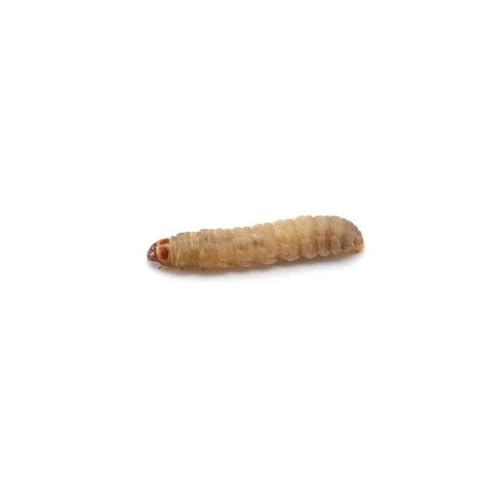
Dubia.com Live Waxworms (100 ct)
A fatty, occasional treat to use sparingly.

Fluker's Reptile Calcium Without D3
Phosphorus-free calcium for dusting feeders, the key to a healthy Ca:P ratio.

Rep-Cal Herptivite Multivitamin Powder
A twice-weekly multivitamin to fill micronutrient gaps in the diet.

Ceramic Reptile Food and Water Bowl (2 pk)
A shallow bowl that keeps salad and feeders off the substrate.
As an Amazon Associate we earn from qualifying purchases at no extra cost to you. Feeding and supplement guidance here is researched care information, not veterinary advice; confirm dosing with a reptile vet.
Waxworm nutrition for bearded dragons
Waxworms are extremely high in fat and relatively low in protein and other nutrients. Their calcium-to-phosphorus ratio is poor, and they offer little beyond calories. Dragons love them, which is part of the problem, since they can become addicted and refuse healthier foods. Think of waxworms as a high-calorie treat with a narrow purpose.
| Factor | Waxworms |
|---|---|
| Fat | Very high |
| Protein | Low to moderate |
| Ca:P ratio | Poor (more phosphorus) |
| Nutrient density | Low |
| Best role | Rare treat or weight gain |
How to feed waxworms
- Offer only a few waxworms at a time, and infrequently.
- Dust them with calcium powder before feeding to offset the poor mineral balance.
- Use them strategically to help underweight or recovering dragons gain weight, under a vet's guidance.
- Avoid feeding them so often that your dragon refuses other foods.
- Store them properly, since they are perishable.
How often can they eat waxworms?
For a healthy dragon, a couple of waxworms no more than once every week or two is plenty, and even less often is fine. They are a treat, not a staple. The main legitimate reason to feed them more is to help a thin, sick, or recovering dragon regain weight, and that is best done with veterinary input.
Risks to watch for
- Obesity and fatty liver from the very high fat content.
- Addiction, where a dragon refuses healthier feeders while holding out for waxworms.
- Poor calcium balance from the high phosphorus.
- Low overall nutrition if waxworms displace better feeders.
A healthy bearded dragon diet is roughly 80 percent leafy greens and vegetables and 20 percent insects for adults, and the reverse for babies and juveniles. The best staple greens are calcium-rich, low-oxalate options like collard greens, mustard greens, turnip greens, dandelion greens, and escarole. Build the daily salad around those, then use the foods on this page to add variety and color.
Frequently Asked Questions
Are waxworms bad for bearded dragons?
Waxworms are not toxic, but they are very high in fat and low in nutrition, so they are unhealthy as a regular food. Fed too often they can cause obesity, fatty liver, and a refusal of healthier feeders. As a rare treat or a tool to help underweight dragons gain weight, they have their place, but they are never a staple.
How often can bearded dragons eat waxworms?
For a healthy dragon, just a couple of waxworms once every week or two at most, and less is fine. They are essentially candy. The main reason to feed them more frequently is to help a thin, sick, or recovering dragon put on weight, which should be done with guidance from a reptile vet.
Can waxworms help an underweight bearded dragon?
Yes, this is their best use. Because waxworms are so high in fat and calories, they can help a thin, sick, or recovering dragon regain weight. If you are using them for this purpose, do so under the guidance of a reptile or exotic vet, and return to a balanced diet once the dragon reaches a healthy weight.
Can baby bearded dragons eat waxworms?
Only very rarely, if at all. Babies need protein and calcium for healthy growth, not fat, and they can quickly become addicted to waxworms and refuse better feeders. If offered at all, it should be an occasional single treat. Feed babies staple insects like appropriately sized dubia roaches and crickets instead.
Why do bearded dragons get addicted to waxworms?
Waxworms are soft, fatty, and delicious to a dragon, much like junk food is to people. A dragon that eats them often may start refusing healthier feeders and greens while holding out for the treat. To prevent this, keep waxworms rare and ensure the bulk of the diet is staple feeders and greens.
Should I dust waxworms with calcium?
Yes. Even though waxworms are only an occasional treat, dusting them with calcium powder before feeding helps offset their poor, phosphorus-heavy mineral balance. It does not change the fact that they are a high-fat indulgence, but it makes the occasional waxworm a little more nutritionally responsible.
Need more help with your bearded dragon?
Browse our guides by topic to find practical solutions.
Care Planner: $39