Baby Bearded Dragon Diet: Complete Feeding Guide
A complete baby bearded dragon diet guide: the 80/20 insect-to-greens ratio, how often to feed, safe insect sizing, calcium dusting, and building healthy habits.
Baby bearded dragons grow at an astonishing rate, and their diet has to keep up. Unlike adults, babies eat mostly insects, roughly 80 percent of their intake, to fuel that rapid growth and build strong bones. Feeding a baby correctly in its first months sets the foundation for a healthy adult, while mistakes here can lead to stunting or metabolic bone disease. This guide covers exactly what, how much, and how often to feed a baby bearded dragon, plus the supplements and safe sizing that keep it thriving.
Baby Bearded Dragon Feeding Essentials

NutriCricket Small Banded Crickets (110 ct)
Small, active prey sized for hatchlings and young babies.
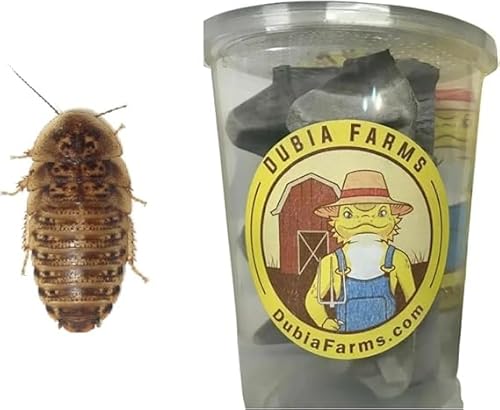
DUBIA FARMS Medium Dubia Roaches (100 ct)
Smaller dubia for growing babies and juveniles.

Fluker's Live Black Soldier Fly Larvae (250 ct)
Calcium-rich, soft staple ideal for fast-growing babies.

As an Amazon Associate we earn from qualifying purchases at no extra cost to you. Feeding and supplement guidance here is researched care information, not veterinary advice; confirm dosing with a reptile vet.
The 80/20 rule for babies
The defining feature of a baby's diet is its heavy emphasis on insects. Aim for roughly 80 percent insects and 20 percent plants. This is the reverse of an adult's diet, and for good reason: a hatchling can nearly double in size in its first months, and that growth demands protein, fat, and calcium that only frequent insect meals can supply. The ratio gradually shifts toward plants as your dragon matures, but in the baby stage, insects lead.
How often and how much to feed
Babies need to eat insects two to three times a day. At each feeding, offer small, dusted, gut-loaded insects and let your baby eat as many as it wants in a 10 to 15 minute window, then remove the rest. Across a full day, a baby may eat 25 to 50 small insects, but appetite varies, so the feeding window is a better guide than a fixed count. This frequent schedule may seem like a lot, but it matches the energy a growing baby burns. Always offer fresh, finely chopped greens daily as well, even if your baby ignores them at first.
Best feeder insects for babies
Young dragons need soft-bodied, easy-to-digest feeders sized to their small mouths:
- Small or pinhead crickets, active prey that triggers a strong feeding response.
- Small or medium dubia roaches, high protein, low fat, soft shell, easy to digest.
- Black soldier fly larvae, naturally calcium-rich and ideal for bone-building babies.
Avoid hard-shelled, fatty feeders like mealworms and superworms for babies, since they are difficult to digest and raise the impaction risk. Save those for adulthood.
Safe insect sizing
Sizing is the single most important safety rule for babies. Never feed an insect wider than the space between your baby's eyes. A hatchling's gut is tiny, and an oversized feeder can cause impaction, a blockage that can lead to paralysis or death. When choosing between two sizes, always pick the smaller. Many small insects are far safer than a few large ones, and babies handle small prey better anyway.
Supplements for strong bones
Babies are building their skeleton at top speed, so calcium is critical. Dust feeder insects with calcium powder at nearly every feeding, and add a reptile multivitamin once or twice a week. Whether to use calcium with or without D3 depends on your lighting: with a strong, current T5 HO 10.0 UVB bulb, use plain calcium most of the time, while weak or absent UVB calls for calcium with D3 so the calcium is actually absorbed. Combined with proper UVB and basking heat, this routine is your best defense against metabolic bone disease, which is the leading preventable killer of young dragons.
Building good habits early
Even though babies favor insects, offer finely chopped greens every single day. Dragons learn to eat what they repeatedly see, so a baby that has salad in front of it daily is far more likely to become an adult that eats its greens. Make the salad appealing with bright, varied pieces, and do not be discouraged if it is ignored at first. With frequent dusted insect meals, daily greens, correct sizing, and solid UVB and heat, your baby bearded dragon has everything it needs to grow into a strong, healthy adult.
Frequently Asked Questions
What do baby bearded dragons eat?
Baby bearded dragons eat mostly feeder insects, roughly 80 percent insects and 20 percent plants, because they need protein and calcium to grow rapidly. Offer small, soft-bodied insects like small crickets, small dubia roaches, and black soldier fly larvae two to three times a day. Provide finely chopped greens daily too, even though babies often ignore them at first, to build the habit early.
How often should I feed a baby bearded dragon?
Feed insects two to three times a day for babies under about five months. At each feeding, offer as many appropriately sized insects as your baby eats in 10 to 15 minutes, then remove the rest. Fresh chopped greens should be available daily. This frequent, protein-rich schedule supports the fast growth that occurs in the first months of life.
How many insects should a baby bearded dragon eat?
A baby may eat 25 to 50 small insects per day spread across two or three feedings, though the exact number varies with appetite and insect size. Rather than counting, use the 10 to 15 minute window: let your baby eat its fill, then remove uneaten insects. Strong appetite and steady growth are normal and healthy at this stage.
What size insects can a baby bearded dragon eat?
Babies need very small insects. Never feed anything wider than the space between your baby's eyes, which for a hatchling means small or pinhead crickets, small dubia roaches, and black soldier fly larvae. Oversized feeders are the leading cause of impaction in young dragons, which can be fatal, so always err toward smaller insects when in doubt.
Do baby bearded dragons need calcium supplements?
Yes, and consistently. Babies are building bone rapidly, so dust their feeder insects with calcium at nearly every feeding, and add a reptile multivitamin once or twice a week. Use calcium without D3 if your baby has strong T5 HO 10.0 UVB, or calcium with D3 if UVB is weak or absent. Proper calcium plus UVB prevents metabolic bone disease, the top killer of young dragons.
Why won't my baby bearded dragon eat greens?
It is completely normal for babies to prefer insects and ignore greens, because their instinct is to chase protein for growth. Keep offering finely chopped greens daily anyway, since dragons learn to eat what they see consistently. Make the salad appealing with color, mince it small, and be patient. Most dragons start eating more greens as they mature toward their plant-heavy adult diet.
Need more help with your bearded dragon?
Browse our guides by topic to find practical solutions.
Care Planner: $39