Adult Bearded Dragon Diet: Complete Feeding Guide
A complete adult bearded dragon diet guide: the 80/20 plant-to-insect ratio, daily greens, how often to feed insects, supplements, and preventing obesity.
The biggest diet change in a bearded dragon's life happens at adulthood. The insect-hungry baby that ate protein multiple times a day becomes an adult that eats mostly plants, with insects only a few times a week. Many keepers miss this shift and keep feeding their adult like a baby, which leads straight to obesity and fatty liver disease. This guide explains the adult 80/20 diet, what a daily salad should look like, how often to offer insects, and the supplements and portion control that keep a mature dragon lean and healthy.
Adult Bearded Dragon Feeding Essentials

Fluker's Buffet Blend Veggie Diet
Dried veggie variety to supplement fresh daily greens.

Dubia Roaches 100 Large Dubia Roaches
Lean staple insect for the 2 to 3 weekly feedings.

Fluker's Reptile Calcium Without D3
Dust insects and salad to maintain bone health.

Zoo Med Reptile Food Dish (Medium)
Shallow dish for the generous daily adult salad.
As an Amazon Associate we earn from qualifying purchases at no extra cost to you. Feeding and supplement guidance here is researched care information, not veterinary advice; confirm dosing with a reptile vet.
The 80/20 rule for adults
An adult bearded dragon's diet should be roughly 80 percent plants and 20 percent insects, the mirror image of a baby's diet. By the time a dragon reaches about 18 months, its growth has largely finished, and its body no longer needs the heavy protein and fat that fueled the baby stage. Continuing to feed insects daily simply piles on fat. Greens become the main meal, and insects become a supplement. Making this transition at the right time is one of the most important things you do for an adult dragon's long-term health.
Building the daily salad
Because plants are now the foundation, the daily salad deserves real attention. Build it on staple greens with a favorable calcium-to-phosphorus ratio and rotate them for variety:
- Staple greens: collard, mustard, dandelion, and turnip greens, plus escarole and endive.
- Vegetables: butternut and acorn squash, bell pepper, grated carrot, green beans, and snap peas.
- Occasional fruit: a few berries or a small cube of melon on top, once or twice a week.
Chop everything small, offer it fresh each morning in a shallow dish, and remove it in the evening. Limit high-oxalate greens like spinach and beet greens to rare extras, and skip iceberg lettuce, which is nutritionally empty. A varied, generous salad is the centerpiece of an adult's diet.
How often to feed insects
Offer insects only two to three times a week to an adult. On those days, provide a small portion of dusted, gut-loaded staple feeders like dubia roaches or crickets, sized to the space between the eyes. That is enough to supply the animal protein an adult still needs without tipping it into obesity. Keep fatty treats like superworms and waxworms to occasional rewards, not regular fare.
| Food | Frequency | Portion |
|---|---|---|
| Fresh greens and vegetables | Daily | Generous, the main meal |
| Staple insects | 2 to 3 times weekly | Small (about 10 insects) |
| Fruit | 1 to 2 times weekly | A few small bites |
| Fatty treat insects | Occasional | A few, as a reward |
Preventing obesity
Obesity is the most common diet-related problem in adult bearded dragons, and it is almost always caused by feeding too many insects or treats. Watch for fat pads bulging above the eyes, a swollen jowl, and a thick, fatty tail base. To keep your adult lean, stick to the insect schedule of two to three times a week, make greens the daily centerpiece, limit fatty treats, and weigh your dragon regularly to catch upward trends early. A lean adult lives longer and avoids the fatty liver disease that overfeeding causes.
Supplements for adults
Adults still need calcium to maintain healthy bones, and females need it for egg production whether or not they are bred. Dust feeder insects with calcium at most insect feedings, and lightly dust the salad a few times a week as an extra margin since adults eat fewer insects. Add a reptile multivitamin about once a week. Choose calcium with or without D3 based on your UVB setup, using plain calcium with strong T5 HO 10.0 UVB and D3 calcium when UVB is weak or absent. With a plant-heavy diet, sensible insect portions, regular supplements, and proper UVB and heat, your adult bearded dragon can stay healthy and active well into its teens.
Frequently Asked Questions
What do adult bearded dragons eat?
Adult bearded dragons eat mostly plants, roughly 80 percent greens and vegetables and 20 percent insects. This is the reverse of a baby's diet. Offer a generous fresh salad of staple greens like collard, mustard, and dandelion greens every day, and provide calcium-dusted feeder insects only two to three times a week. The shift to a plant-heavy diet keeps adults lean and prevents obesity.
How often should I feed an adult bearded dragon insects?
Adults need insects only about two to three times a week. Their bodies have finished most growth, so a constant supply of insect protein and fat causes obesity and fatty liver disease. On insect days, offer a small portion of dusted, gut-loaded staple feeders. On all days, provide a fresh salad, which should be the main part of an adult's diet.
When does a bearded dragon become an adult?
Bearded dragons are generally considered adults around 18 months of age, though growth slows and the diet begins shifting toward plants well before that, through the sub-adult stage from about 12 to 18 months. By 18 months, your dragon should be eating a plant-heavy, roughly 80/20 diet with insects only a few times a week. Use age and size together as your guide.
What greens should adult bearded dragons eat daily?
Build the daily salad on staple greens with a good calcium-to-phosphorus ratio: collard greens, mustard greens, dandelion greens, turnip greens, and escarole. Add variety with squash, bell pepper, grated carrot, and green beans. Rotate several greens through the week, chop everything small, and offer it fresh each morning. Limit spinach and beet greens, and skip iceberg lettuce entirely.
Can adult bearded dragons get obese?
Yes, obesity is one of the most common health problems in adult bearded dragons, usually from feeding too many insects or fatty treats. Signs include fat pads bulging above the eyes, a swollen jowl, and a thick tail base. Prevent it by keeping insects to a few times a week, limiting treats like superworms and waxworms, and making greens the main daily food.
Do adult bearded dragons still need calcium supplements?
Yes. Even on a plant-heavy diet, adults need calcium to maintain bone health and, for females, to support egg production. Dust feeder insects with calcium at most insect feedings, and you can lightly dust the salad a few times a week as well. Add a reptile multivitamin once a week. Match your D3 source to your UVB setup as you would for any age.
Need more help with your bearded dragon?
Browse our guides by topic to find practical solutions.
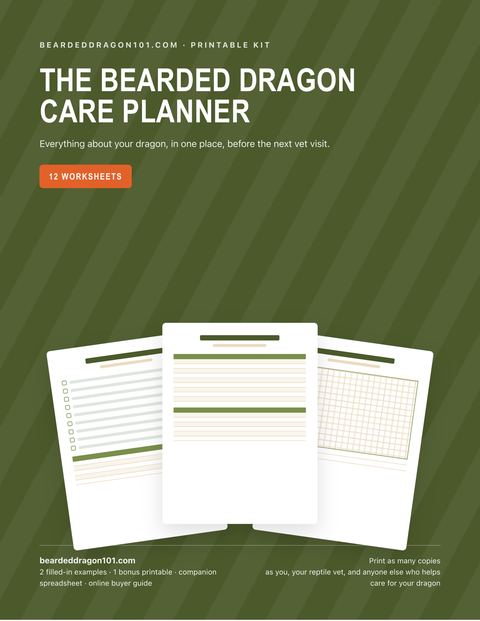
Care Planner: $39